How to Save Your Marriage When Your Spouse Won’t Try
If you are frustrated with a spouse who complains about your marriage but won’t work on it, you’re not alone.


I’m Coach Jack and over the past thirty years I have helped thousands of people to save their marriage in this very situation. Today, I’ll share with you what you can to do improve or even save your marriage, even if your spouse won’t cooperate.
I’ll also share with you an example of how a client fixed his marriage without his wife’s cooperation and helped her let go of a grudge she held for years.
When a spouse complains a lot, won’t work on your marriage problems, and doesn’t leave either, What’s going on?

Certainly it’s not enjoyable for you to live in such an unhappy marriage. How can your partner enjoy being in such a relationship, day after day, and year after year?
Seemingly, your spouse would love for you to change things about yourself so that he or she can enjoy the relationship better, while giving nothing in return. That’s your spouse’s idea about how to fix your marriage.
More than likely, you have even tried to do what he or she wants and still have gotten nothing in return. Most people in this situation will understandably feel hopelessly stuck.
Fortunately, creating a better relationship from this situation is not only possible, it is very possible. And, you don’t need to go to couple’s marriage counseling to do it. Every day of the week I am helping men and women to improve their relationships without their partner’s help. This is because they all have spouse’s who are not yet on board as far as improving the relationship goes.
The good news is that all of the early changes required for reconciling and marriage improvement can be done by one partner. You can get your partner to the point where he or she will actively engage in relationship improvement. Today, I will help you to understand how. I will also let you know about some additional resources that can help you get you started with that process.
While you don’t need to completely understand your partner to make progress, there are some basic things that are helpful to know.
The first thing to understand is that although your partner may not want to work on marriage issues and may blame you for everything, he or she does not want to have a bad relationship.
I have yet to meet one single person who wants a bad relationship or marriage problems. Try asking your friends and family or random people on the street if they would like have a bad relationship. I don’t think anyone will take you up on your offer.
Although you and your spouse disagree on how to fix your broken marriage, you are both in agreement (internally, at least), that it would be a good thing if you could. I think it would be very helpful if you tell yourself that your partner would like to have a better relationship with you, but doesn’t know how. That will help lower any feelings of animosity toward your spouse.
Another important thing to understand is that one partner is always ready to work on a relationship before the other one.
For some reason, people often unreasonably expect that their partner is going to have the same desire as them at the same time.

But, in actuality, as when you were single, one person wants to date before the other, one person wants to commit before the other, one person wants to marry before the other, one person senses problems before the other, one person wants to do something about those problems before the other, and if problems go on too long, one person wants to break up or divorce before the other.
If you have accepted these two principles, then you can believe your partner wants to have a good relationship, but does not yet want to work on the relationship, for whatever reason.
This leaves you with three choices.

You can wait until things get bad enough that your partner wants to work on the relationship, you can try to convince your partner to work on the relationship, or you can work on saving your marriage alone, until your spouse is ready. There are actually many things you can start to do to work on fixing your marriage.
Like all choices, these three choices each have pros and cons. Waiting for your spouse to be ready to work on the relationship brings big risks. Because it may take a long time and more damage, you may be too burned out to work on things. The longer you wait, the more likely a marriage separation is to happen. Many people would rather run away from problems than work on them.
What about convincing your partner? This is what people commonly try to do. If it works without creating additional conflict, then I think it is a good thing to try. In that case, you and your partner’s dissatisfaction and desires about your relationship are not so different.
On the other hand, if you have been trying to convince your spouse for a while, I recommend you stop. You have discovered that your words are not going to convince your spouse. All they are doing is frustrating you, causing a drop in loving feelings for both of you, and causing even bigger marriage problems. Continuing to try to convince your partner to work on your relationship is like trying to dig your way out of a hole–it just makes a bigger hole.
What about the third option of starting to work on your marriage alone? The disadvantages of this choice is that it requires learning how, and things will get worse before they get better. This is because when you start to change the way you interact with your partner, you will get resistance. People don’t like change, even when it is good change. Change feels scary to most people. However, once the interactions become more positive they are glad the change happened.
Many people who try to work on their marriage on their own soon give up because of this resistance which seems to make the relationship worse.

People have an unreasonable expectation that when they work on improving their relationship, things will just get better in a straight line.
The fact is that nothing we work on in life is like that. If you start to work on getting into physical shape, you will feel sore and tired at first. You have to push through that to get to the benefits of feeling and looking better. Every project is difficult at first, every new situation is an awkward one, and every vacation starts with uncomfortable flying or driving.
One of the most helpful beliefs you can have is that positive change will make things worse, then better. Worse, then better. You are not going to get to better without going through worse.

How can working on your marriage alone create an improved relationship?

By learning to combine words with actions. Words without actions are just so much noise that can be tuned out. But actions can’t be tuned out. And actions without words are often misinterpreted.
There are three types of messages where our words and actions must match to create a good relationship.
We need to have words of love, trust, and affection without behaviors like criticism, arguing, and interrogation. Needy people believe that they can force a good relationship from their partner, but these behaviors only push people further away.
Many times it pushes them into affairs, marital separation, or divorce. If you are trying to force love, attention, and affection from your spouse, I recommend you get my book on overcoming neediness. Working on these behaviors may be all that you need to do to prevent separation or even stop a divorce.
We also have to validate our spouse while behaving in a friendly way.
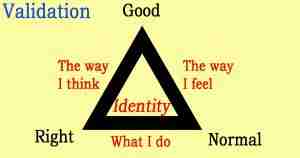
This is a consistent message of how much we like our spouse and our desire to be together. Many people have substituted a polite exchange of information for friendly and regular interaction, creating emotional distance in their relationships.
If you have a business partner or roommate situation, this may be what happened to you. Friendly daily verbal and nonverbal interaction on a daily basis, as well as regular dating, will help you reconnect with your spouse.
The third word-action match needs to be with our boundaries which are both stated and demonstrated by no longer participating in the damaging behavior. For example, saying that you would be glad to discuss whatever your partner wants to, but only when he or she is calm, and then refusing to discuss when he or she isn’t, is a consistent match between words and behaviors. This is important for getting your spouse’s respect without having conflict.

Despite whatever you may have heard, there is no such thing as healthy fighting.

Fighting is no more conducive to a good relationship than avoidance, and in fact it just does damage even faster. Loving behavior and good boundaries are the healthy alternatives to avoidance and conflict. These behavioral changes are how my clients learn to create rapid progress in their relationships.
Secondly, get help with fixing your marriage. Learn how to combine your words with actions. Your spouse can disregard your words, but not your actions. The reason you need help with this is that both the words and actions must be tough and loving at the same time. Being loving or being tough are not so difficult to do separately, but neither of them are effective on their own.
There is no place for messages of rejection of our partners. We can reject their behavior, but we must always make them feel loved. Children and spouses can both understand when their behavior is bad, but they still need to feel loved by us. This is the Christian idea of hating the sin, but loving the sinner.
God forgives us when we change our ways and go to Him. We must extend the same grace to our partners.

While a secure person won’t put up with continuing bad behaviors, a loving person also won’t hold a grudge against their partner, child, friend, or anyone else because of past behaviors.
If part of the problem in your relationship comes from you or your spouse not letting go of a behavior which is well in the past, there are good ways to let go of those things for both of you. As a coach, I see letting go as a matter of knowing how. You can learn if this if it is holding you back. If your partner has a grudge against you, you can also learn how to help your spouse to let go of it. The first steps are still going to be the work that I have talked about today.
If you require your spouse to let go of a grudge before you work on your marriage on your own, you will be stuck. It is the fear of losing a good relationship that helps people to let go of the past. This means that you will need to work on making your relationship good for your spouse before using boundaries that will help him or her to truly forgive you.
Marcus was one of my clients who learned this. His wife had not forgiven him for not being supportive enough early in their relationship when she had some medical procedures. Marcus regretted his early ignorance and not providing more support and tried to make up for it for years. But, his wife would still bring it up and often said hurtful things to him. She didn’t want to go to marriage counseling to work on what she believed what his fault.
I helped Marcus to make sure he was really doing his best for their marriage and then to create the feeling in his wife that she might lose him. That combination very quickly resulted in her letting go of a grudge she had held for years. It was an example of tough love that Marcus had to do for his sake as well as his wife’s sake. He had to help her to let go of something she was unable to let go of on her own.
The last thing your spouse wants is for you to give up on him or her.

And, if you did, then your marriage would be over. As much as your partner may not currently want the changes that you want, he or she wants to be loved. Showing your partner that you love enough to do what is required to have a good marriage may be a kind of love that your spouse has always wanted, but never received.
Many people have only been rejected for their behaviors so become very defensive if they receive any disapproval. As a loving spouse, you will deal with the behaviors, while still showing love for him or her. This kind of change on your part can fix a broken marriage and make the two of you closer than you have been in years.
Many divorces could be prevented if people learn such an approach rather than using conflicted and convincing approaches.

“Love Must Be Tough,” is the title of a book written by Dr. James Dobson. Another Christian psychologist. The book was written for people whose spouses are having affairs. He was one of my role models for my development as a psychologist, therapist, and coach. It is my hope that more coaches and counselor will follow this loving, but tough approach.
Fixing your marriage may require you to have the love and strength to work on fixing your marriage alone until your spouse is ready to engage with you in the process.
If you are having difficult marriage issues with a spouse who won’t work with you, it’s really not in your best interest to wait, hoping that he or she will at some point. You can started today and I would be happy to help. You can start with a consultation or go directly to a coaching package.
For further study: The Mental Health Effects of Holding a Grudge.