
Emotional Intimacy in Marriage: 3 Daily Habits that Work
Without emotional intimacy, a marriage is no more than a business partnership. If your marriage is starting to feel like that, here are some ways to emotionally reconnect.
What Is Emotional Intimacy?

If you only have some fuzzy idea about what emotional intimacy is, you are not alone. Just like the word “love,” emotional intimacy can have different meanings for different people. What you mean by emotional intimacy may be different from what your spouse means by emotional intimacy. If you were my client, or working with me as a couple, I would want us to start off with the same definition to make sure we were working toward the same thing.
“Intimacy,” is related to exclusive personal sharing. The more exclusive the sharing, the more intimate it is.
“Emotional” sharing has to do with sharing our emotions (or feelings) directly, or sharing things that make us have emotional feelings. Saying that the garbage pickup day changed is not emotional sharing. Saying that you are frustrated with the changes in the garbage pickup schedule is emotional sharing.
We can contrast this with “physical intimacy,” which has to do with physical contact you have with your spouse that you don’t have with others. You may hug many people, and if so, hugging is not an intimate behavior for you. But, if you only hug your family, then it is an intimate behavior.
If you only hug your spouse, it is an even more intimate behavior. “Sexual intimacy” is “intimate” because it is something we do only with our spouse. It is exclusive to our marriage. An open marriage would take away that exclusivity, make our relationships less intimate, and damage our marriage—as would not having any physical intimacy at all.
“Emotional intimacy” works the same way, but with the sharing of feelings or emotional experiences. There should be a level of sharing that we only do with God or our spouse. Sharing requires us to be emotionally vulnerable. That means we must trust whoever we are sharing with not to be dismissive or critical of our feelings. In fact, we are seeking validation of our feelings when we share, rather than solutions or mere understanding.
Problems that Decrease Emotional Intimacy

Problems in emotional intimacy happen when limited trust and/or time prevents emotional sharing. Becoming overly focused on the practicalities of day to day living can reduce the amount of sharing that we need to stay connected to each other in a personally meaningful way rather than just a practical way.
Problems can also happen when we trust our friends and social contacts with our feelings more than we do our spouse. Then we have more emotional intimacy with others and more of a casual relationship with our spouse. Such relationships are weakly connected and prone to conflict, affairs, and divorce.
If your spouse feels more comfortable sharing with others than with you, then you have such an upside down relationship. You may not have made the time just to enjoy each others company, or tried to fix your spouse’s feelings rather than to validate them. If so, then you can change these things and today I will give you some examples of how to do that.
Why Emotional Intimacy Matters in Marriage

To recap, emotional intimacy is sharing important feelings and experiences with someone we trust, who validates us—someone who doesn’t try to merely understand us or fix us. We like to share with someone who validates us, makes us feel similar to them, and who makes us feel normal, or right.
Emotional intimacy can’t be created by logical and practical interaction. People who are too logical often have trouble with emotional intimacy.
There are many couples who don’t have emotional intimacy. Don’t confuse what is common for what is normal or healthy, though. Everyone has a need for emotional intimacy and those who don’t have it are going to be harmed by that just as if they were lacking essential nutrients.
In marriage, emotional intimacy maintains our identity as a couple (that is, we have something together that is better than what we have with others). It also validates our worth as a spouse by making us feel like we are important and similar to our spouse.
Why Emotional Intimacy Breaks Down

There are several common reasons that couples go from having strong emotional connection to having little or no emotional connection over the course of their marriage.
These include:
- Neglecting to spend quality time together,
- having too much neutral time together,
- negativity and criticism which damage trust,
- lack of validation which punishes emotional sharing,
- being overly emotionally reserved with a trustworthy and validating spouse. This can be caused by a traumatic history, cultural, and personality factors.
- Another reason is a failure to resolve practical issues, which then leads to resentment or conflict.
You will notice that some of these issues may require individual counseling, to work on overcoming trauma, for example. There is much that can be done however, by making some changes in your daily routine.
What I don’t recommend is that you suddenly start sharing your deep feelings and experiences with your spouse. That could bring a lot of disappointment. Build your relationship and gradually share to the level where you are validated. Likewise, work on validating your spouse without being critical or attempting to fix him or her.
Three Daily Habits That Restore Connection

Here are three things that you can to to work your way toward a more emotionally connected relationship:
- Make a system to manage practical issues. Much of what we need to do in life is repetitive and routine. You need a system as an individual and a couple to manage these routine tasks. This will free up time and energy for more enjoyable interaction.
- Use a high amount of verbal validation. You must continually make your spouse feel right, similar and normal. Without this, sharing will be reserved for sharing negative things about you. If you want intimacy, you must foster trust while expressing love and acceptance.
- Cut out excessive neutral and negative time together. Too much time together reduces the desire to be together, reduces feelings of love, and gives people less to talk about. When you are not having quality time with your spouse, go do something else.
Let’s cover these three behaviors in more detail, starting with the first one—creating a system for everyday routines.
Habit 1: Create a Working System for Practical Issues

Here are six steps you can take for starting a routine:
- List all the chores that need to be done.
- Divide the duties according to ability and fairness.
- Use a shared schedule to keep each other informed about personal and practical events.
- Have a set time for talking about practical and business issues so that it doesn’t bleed into or replace personal time.
- Have an emergency fund, babysitter, and backup babysitter.
- Rotate some duties to foster appreciation, cross training, to give each other a break, and for a change of pace.
Why It Works
When you take these six steps, there is:
- No need to talk about recurring routine tasks,
- the cooperative business partner aspects of the relationship are taken care,
- resentment is prevented,
- a feeling of partnership is fostered, and
- there is more time and energy available for personal interaction.

Habit 2: High Verbal Validation
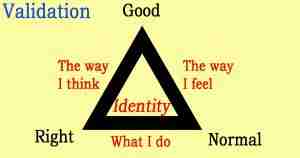
Now, let’s talk about validating more:
Validation is done verbally and non-verbally to give our spouse the sense that we like them, how they look, how they think, how they feel, and what they do. The better we validate our spouse, the more our spouse will feel liked and want to be with us and share with us. To help foster this we always look happy to see them, agree with their ideas, empathize with their feelings, are interested in what interests them, as well as appreciate and compliment what they do.
It is work, as all relationships are. But if you love your spouse, it should be enjoyable work.
If It Feels One-Sided

It might feel really unnatural do these things if you are not used to doing them. Keep in mind that all things feel unnatural until we get used to doing them. People who want to grow need to seek out things that feel difficult and unnatural. Don’t do things because they are easy. That won’t get you anywhere. And, don’t do whatever feels natural as that will prevent you from growing, or your relationship from improving.
No matter how hard it is, when we validate our spouses we will get the best behavior from them. If you haven’t been validating, you will need to gradually do that more. Expect it to take some time for trust to develop, for your spouse to desire you more, and for your spouse to be more vulnerable with you.
Habit 3: Eliminate Excessive Neutral and Negative Time Together

Did you know that too much of a good thing is a bad thing? Hanging out with your spouse too much can be as damaging as not spending enough time together. Positive time together you never have to worry about. It is the neutral (or especially the negative) time together which decreases our feelings of love and connection.
How can you decrease neutral time together?
Married people need to have their own hobbies and interests that they can do rather than hanging around their spouse in non-interactive situations. Watching TV together or using cell phones in the same room are examples of non-interactive time together. Some people count this as their quality time, but it is not quality time.
If this is the only time you have with your spouse, cutting it out will increase your spouse’s desire to have quality time with you, provided that you are otherwise being a desirable person. Then you can go for a walk together or have a drink on the patio together (with your phones off).
How can you further reduce neutral time together? There are literally thousands of possibilities. On your own (without your spouse) go to the gym, ride your bike, join a club, take a course, fix up your house, make new friends, join the choir, and the list goes on and on.
Because your spouse, just like everyone else, only wants to have a certain amount of interaction with you, every minute of neutral time you remove is one minute more of quality time that you can add to your time together.
Client Example: Antonio’s Story

None of my clients have good emotional connection with their spouse when we begin working together. Most are like my client Antonio who had reduced his time at work to spend more time with his wife. The thing is, his wife didn’t want more time together. In fact, she had told him that she wanted a divorce.
Antonio knew that one of his wife’s biggest complaints about him was spending too much time at work and too little with her. So, he thought by spending more time with her, he would remove her desire to divorce. But, although his wife had wanted more emotional connection in the past, she was no longer at that emotional place.
Because of that, Antonio would have to work step by step to help his wife get to the place where she desired his company again. All the current neutral and negative time Antonio was spending with his wife was just making her feel pressured. He was pushing her into a separation so she could get away from him.
Helping Antonio Restore Emotional Connection

As Antonio’s coach, I helped him to take steps that could get him back on the path to emotional connection.
The first was for him to be relaxed around his wife—friendly—but not trying to engage her in conversations.
The second was for him to cut out all neutral time by finding other things to do apart from his wife. That helped his wife to feel more relaxed and okay in their home.
The third was for him to gradually start to validate his wife, without any defensiveness or debating. Over time, these steps helped Antonio’s wife start to enjoy casual conversations with him.
Badly damaged relationships must be rebuilt step-by-step. Even ones that aren’t badly damaged, are improved with small steps rather than leaps and bounds. Moving too quickly or ahead of our spouse’s feelings will cause resistance. Then, if we persist, we will get rejected.
Where to Start When Intimacy Is Low

Reducing neutral time together is the best place to start in your quest for emotional intimacy in your marriage. This is because it won’t create conflict and because it will feel natural. In addition, you can gradually increase validation during interactions. This will start to build positive time.
Following these steps will bring you to positive interaction. Then, you can start to implement practical steps to reduce the business interactions in your marriage. These three steps will help you go from business partner or roommate to a more emotionally intimate marriage.
There is a lot that you can do to restore emotional intimacy

Today, I’ve given you three steps to improving emotional intimacy in your marriage. Between the lines, I’ve actually given you a lot more. Start with the idea that is least likely to lead to rejection. After you have accomplished that step, do the same with the next step. You may be surprised at how much emotion connection you can restore without ever having to talk about it with your spouse.
If you would like to work with me as an individual or as a couple in couple’s coaching, I will help you to follow a step by step path which does not create conflict or lead to rejection.
If you are already working on this, but are getting resistance or rejection, don’t do more of the same. Instead, adjust the step you are on to one that is in your spouse’s comfort zone and then build from there.
I wish you all the best in making your relationship with your husband or wife a much better one for both of you.

For further reading on the importance of emotional intimacy in marriage:
Schoebi, D., & Randall, A. K. (2015). Emotional dynamics in intimate relationships. Emotion Review, 7(4), 342–348.