How to Keep Your Marriage Strong and Avoid Divorce
The wrong expectations and missing key behaviors will create a relationship that neither you nor your spouse will enjoy. But, if you make some changes now, you can keep your marriage enjoyable.
I have worked with thousands of men, women, and couples over the last 30 years.
Most of the time, I help them to rebuild marriages that have been getting progressively worse for years.

If your relationship is gradually slipping away, it will slip away completely unless you do something about it. Waiting for it to magically get better or for your spouse to change is not going to accomplish anything good. I know it’s not what you want to hear, but I care enough about you to say it.
Today, I want to share with you some core skills for relationship success. You can then start to put these skills to use right away. They will not achieve overnight miracles in your marriage. Only God can do that, but I recommend you do what you can while you are waiting for Him to do a miracle.
The more good things we can do on our own, the less God let’s us learn the hard way.
Giving love comes before getting love. Never insist on the reverse.

Even if there are ten things your spouse can do to improve your marriage and only one thing that you can do, you need to do that one. If you want more love, attention, and affection from others and most importantly from your husband or wife, ask yourself how you can show more love, give more attention and provide more affection. Giving comes before receiving (Luke 6:38). Do not expect welfare love from your spouse.
As a reconciliation coach, what I mostly help people to do is to use principles of attraction, connection, and boundaries to improve their marriage for themselves and their spouse. What differs between clients is how these principles are applied to their situation and to their particular spouse.
Whatever principles you learn, you have to ask yourself how you can apply them to your situation.
Learning, without action, is just entertainment.
Having a good marriage requires both a helpful mindset and helpful behaviors.

The partner you chose to marry determined how much work you need to do to maintain your marriage. The more similar of a person you married, the less work you need to do. All marriages can be made to work, but when the differences are too great, people lose their motivation to continue to do the work. A marriage not maintained falls apart as surely as a house or car does.
Once you are married, regardless of the personality of your spouse, you will need to do the work of remaining desirable, remaining enjoyable, and using good boundaries. This is the work of maintaining any relationship, especially a marriage.
Let me give you a couple of analogies to illustrate what I am saying.
I like to cook. I try to find the best ingredients for my cooking that I can find or grow. But, if I don’t cook them well, the meal will not turn out good. The freshest ingredients, cooked poorly, are a waste of money.
If you find a great partner, but don’t properly take care of your marriage, you will end up with an unhappy one, just like ending up with a lousy meal made from good ingredients. This happens to many people who are good at the initial attraction phase of relationships, but lack relationship maintenance skills. People who are very physically attractive often lack these skills.

Consider another analogy–someone who buys the best lumber, but has poor carpentry skills is not going to make anything to be proud of. On the other hand, a skillful carpenter can make a pretty good construction even with not-so-good materials. It will never be as good as if he or she used good materials to start with, but it’s still going to be better than the person without the skills.
Low maintenance/low skills or high maintenance/high skills both work. High maintenance/low skills don’t.
Mediocre parents can do a pretty good job of raising an easy going child, with minimal conflict. But only excellent parents are going to be able to raise a difficult child with minimal conflict. The very same dynamics are true for husbands and wives. You will only mess up a relationship with a good spouse by not doing loving maintenance.
You will mess up a relationship with a difficult spouse by both not doing the loving maintenance and having poor boundaries. The more difficult your spouse is, the better you need to be able to show love when you don’t feel like it, and the better you need to be with boundaries. The good new is that these are both things you can learn.
You need to know how to make a relationship work with the kind of partner you have.

People will often know more about how to raise a particular breed of dog than they do about how to nurture a relationship with a spouse who has a particular personality.
One of my favorite books is called, Avoiding Mr. Wrong, and What to Do If You Didn’t. The authors, Arterburn and Rinck, teach women how to identify certain relationship types (e.g. The Control Freak, Mama’s Boy, etc.). The authors talk about why they are that way, how to avoid them, and how to make a marriage work with them if you didn’t notice the signs before you got married. Although written for women, the same principles are true for men.
In summary, marriage success is going to be easiest if you married a close match.
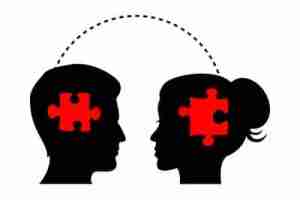
The work of marriage is continuing to be desirable and enjoyable for your spouse, while maintaining good boundaries. The core skills are the same, though adjustments have to be made according to our spouse’s personality.
Some people are pretty good at doing these things but still have limited success. The main reason for that is the inclusion of needy, sabotaging behaviors which come from bad habits and false beliefs. You have to root these out. I have talked much about them elsewhere, but I think it worth a couple of minutes of time here to emphasize a few, since your goal is to have a long and happy marriage.
One of the things you will absolutely need to get right is making sure you prioritize connection over understanding.

People who think that understanding is the way to a happier marriage tend to talk too much, too negatively, too often, and seriously injure their connection with their spouse. Don’t get me wrong–understanding is important. I don’t encourage avoidance in the face of ongoing problems. The thing that people get wrong is believing that understanding is enough to create change. It usually isn’t.
Once something is understood, if no positive change occurs, it’s time to move on to an action step. Getting your spouse to understand again, or repeatedly, can only make you frustrated and lose you respect. This is why repeatedly explaining is on my list of eight needy behaviors in my book on overcoming neediness.
Although the prevailing belief is that openness, honesty, and being yourself will get you a happy marriage, like a lot of information, the facts contradict it. If you actually practice openness and being yourself, it will get you rejected and make you feel like a failure or like you have a terrible spouse. Maybe both. Don’t take my word for this or anything. Try it and see.
Being open, honest, and yourself, all sound good. That is their appeal.

But all harmful behaviors have their appeal. People like to sin because sin is enjoyable and easy to justify–in the moment.
As the Bible says, “There is a way that appears to be right, but in the end leads to destruction (Proverbs 14:12, NIV).”
My own way of thinking about this is, no matter how delicious a poisoned cake is, don’t eat any.
Be better than your natural self
When you are grumpy and tired, stressed by life, and irritated with your spouse’s behavior, do you really think openness, honesty, and just being yourself is the way to go? Being open, honest, and yourself with your negativity will trigger your spouse, create distance, and pull a few more nails out of the structure of your marriage. Lose too many nails, and your marriage will collapse.
Do feel free though, to be open and honest with your loving thoughts. Speak the truth in love. This is the actual skill for communication and relationship building. It is also from the Bible (Ephesians 4:15).
Holding our tongue and, when we can, speaking the truth in love, is going to do wonders that our natural self will never create.

We have to be as careful about what we say to our spouse as we are with other people. We need to consider how what we say will be taken. Our intention does not matter if we are saying things in a bad way.
The same skills we use to maintain our friendships are the ones we need to use with our spouses. Consider how you behave if you encounter a friend. What is your facial expression, your demeanor, and your tone of voice? Do you show interest in your friends even when they are not particularly fascinating? How would you talk about a problem with a friend? Wouldn’t you say lots of nice things about your friend before bringing up any problems?
Who in your life gets your best?

Does your spouse get that relaxed and friendly behavior from you every time the two of you interact? Is your voice friendly? Do your eyes say, I am glad to see you? Do you listen with interest? Do you show appreciation, agree, and give compliments like you would with your friends? If not, you need to get back to doing these things consistently, even if you are tired and don’t feel like it. This is necessary and important work in our marriage and other relationships.
Nothing else you do is going to be helpful if you can’t or won’t do these core skills. You will waste your marriage and it will end eventually, even if you think it never will. Realize that so you can do the right behavior. Although it may feel unnatural, the better relationship it creates will be a big reward for your work. God never advises for us to be our natural self or to just do or say whatever we feel. Be your better self and the better man or woman. Make that your habit.
Many people say they would be satisfied if only their spouse would treat them the same way they treat their friends.
Let me give you a list to assess your core relationship skills:
- Being consistently relaxed (i.e. not appearing upset)
- Being consistently friendly (even when you don’t feel like it)
- Continuing to behave in desirable ways as a man or woman
- Looking your best
- Validating with agreement and empathy
- Giving sincere compliments, appreciation, and admiration to help your spouse feel important
- Prioritizing your spouse over your children, work, family, and friends,
- Making one-on-one time enjoyable and a daily event
- Dating your spouse as if you were single and at least once a week
- Being an enjoyable sexual partner
- Resolving problems without conflict
- Having activities and friends of your own, apart from your spouse
- Being on your spouse’s side in front of all others (children, friends, parents, etc.)
- Using good boundaries to maintain respect and love
You might like to include other things in this list, but most things fall under one of these items. There are actually many facets to each of these items.
If you find any that you know how to do all of these skills but don’t do them, then start doing them all and your relationship will improve.
If there are any you don’t know how to do or don’t do well, then learn the skills involved and practice until you do them well.
These are essential skills meaning that missing even one of them can derail your relationship. The more you miss, the faster your marriage will degrade.
On the other hand,
the more and better you do the core relationship skills, the better your relationships will be.
A lot of people agree with this list of core relationship skills, but make excuses not to do them. For example, they can’t be relaxed and friendly because of their stress. or they can’t date because of their kids. They can’t have friends or activities of their own because of their jobs, and so forth. But amazingly, when their spouse is divorcing them or having an affair, they suddenly become able to do all of those things!

At that point, you can imagine their spouses become angry with them. After all, if they can do all of those things when the marriage is ending, why couldn’t they do them before? If you wait until your marriage is ending to do these things, you are likely to be disqualified by your spouse as being either fake or too late.
Appearing fake results from quick change. Only slow and lasting change is considered to be genuine.
Are there any of these core skills you could do if you had to? If you had no choice? Could you find a way? Have you ever asked yourself why other people can do it but you can’t? If you can’t date because you have children, then how can other people with children date? If you can’t date because you don’t have enough money, how do other people without money date? Some of my best dates were free or nearly free.
If you can’t spend daily time with your spouse because you are busy with your work, how can other people with busy jobs do it? If you can’t exercise because you have a bad knee, then how can other people who use a wheel chair stay in shape?
People who are motivated, find a way. People who are not motivated, find excuses.
Learn what successful people do and do it. Do not take your marriage for granted. Put as much energy into it as you do building and maintaining your career.
Remember,
you only get to keep what you prioritize.
There should be no excuses when it comes to loving your spouse or children, even if you need to use boundaries sometimes. Loving will never make you a victim, though failure to use boundaries can.
Many people try to make up for their neglect in one area by doing extra in others. But you can’t compensate for quality time together by bringing home a bigger paycheck, and you can’t compensate for not being sexual by cooking better meals. Substitutions don’t satisfy.
So, is it too late if your spouse is already disengaged, disinterested, or rejecting?
Well, this is where reconciliation coaches come in. It will be hard to do on your own, though possible. Do what you can and get help with the rest. What you have to do is to start at the emotional place where your spouse is and build from there. If there is still some communication going on, then it is usually possible to rebuild the relationship with a step-by-step approach.
Every interaction needs to be a good interaction–not neutral and certainly not negative.
If your spouse is leaving you, you will want to suddenly do all of the core skills in your desperation, but you can’t if your spouse is not emotionally there. Getting ahead of your spouse emotionally brings resistance, then distance, and then rejection if you persist.
Learning how to build a relationship from the point where your spouse is requires many of the same skills you would need if meeting someone for the first time. You have to help a person uninterested in you to become interested in you and to enjoy your company.
That may sound impossible until you realize that every relationship starts with two people who were previously uninterested in each other. Before meeting my wife I had no interest in her nor she in me. I had no desire to marry her and the same was true for her. But, here we are very grateful to have each other. We got here step by step.
You counter, “But my spouse says there is no chance for us to reconcile.” My wife would have said there was no chance she would marry me if i asked her when we first met. You have to do the work before your spouse will have the desire. The other way around will not work. Getting your spouse to desire you more is not something you do together.
This is the coaching approach. It does not involve working with your spouse to talk about problems as that will just make your relationship more distant. Don’t take my word for it–try it and see, but learn from experience quickly. If it works for you, great. But if it doesn’t, don’t keep doing it.
If you are ready, I would be happy to help you to get your spouse to fall in love with you all over again, using a step-by-step, no conflict approach. See the coaching link below.