How to Resolve Marriage Conflict Without Arguments or Distance
Most couples think conflict is just part of marriage. But the truth is, the more conflict you have, the weaker your marriage becomes. What if instead of arguments, blame, or withdrawal, you could turn differences into the very moments that deepen connection and rebuild love?

Why conflict weakens a marriage

I think one of the most common misunderstandings that couples have is that conflict is somehow a required part of marriage. While differences are inevitable, they do not need to be handled by arguing, criticism, blame, defensiveness, or distancing. These behaviors do nothing to resolve differences, but damage marriage instead.
Talking about healthy amount of conflict is as nonsensical as talking about a healthy amount of mosquito bites. The more you have, the worse off you will be. The message of the Bible is clear that conflict is harmful and it is not God’s will that we be in conflict with our husband or wife. That doesn’t mean that we become passive people pleasers. Certainly Jesus was not that.
Differences don’t have to cause arguments
Differences are inevitable, but conflict is not.
Although we cannot connect on our differences, we can work to find what we have in common when the differences are brought up. We have to be secure enough to admit the truth rather than deny, attack, or defend. This is why the most important skill for reducing and eliminating conflict in marriage is validation.
The power of validation in marriage
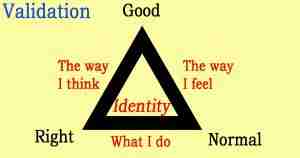
Validation is making someone feel normal, right, or good about they way they think, feel, and behave. There only needs to be one element of truth in what your spouse is saying to validate. That is, you can find the truth in what your husband or wife is saying, even if you mostly disagree internally.
Your spouse will be much more willing to hear what you have to say if you can begin by validating the truth in what he or she says. Although your own desire to defend makes this difficult, it becomes easier with practice.
How to validate your spouse effectively
A quick example of validation is your spouse telling you that you care more about work than you do about spending time with her. Instead of immediately disagreeing, explaining, defending, or reassuring, all you need to do is admit that you have been spending more time at work and been less available for good one-on-one time. If you can do this, you will instantly start to reconnect with your spouse.
When you validate, make sure you don’t cancel out any gains by adding to it any criticism or defensiveness. Validate and then stop talking. Listen again, and validate again.
Why fighting for what you want doesn’t work
I think the reason many people find it difficult to validate is fear. They fear that if they validate, it will mean that their spouse will do what they don’t want to happen. And so, they take an immediately opposing stance. Because we create what we fear, when we take an opposite stance we actually motivate the person to do what we don’t want and have less of an opportunity to motivate them.
People who fight for what they want in marriage end up getting much less than they could if they didn’t fight. You will never get more of what you want from your spouse by fighting your spouse.
Validation alone will not end conflict, but it will make it much easier to end. It will help to maintain the emotional connection you need to make progress either with boundaries or problem solving. Trying to do problem solving in a heated environment won’t work and your boundaries won’t matter as much to a spouse who cares less about your marriage.
Combining validation with problem solving
Validation makes both problem solving and boundaries more effective, if you need to use either. See the resources in the description for more help with validation.
The second major skill for resolving differences is having a structured method for doing problem solving. This will help you to focus on a step by step approach rather than getting derailed by your emotions, like a runaway freight train.
Doing things this way is very unnatural. The natural thing is to defend, attack, explain again and again, wear each other down until a winner emerges. Very few good things in life emerge from being our natural self. We are not called to be our natural self; we are called to be self sacrificial in our love of others. That will never feel natural, so don’t blame yourself if you just don’t feel like validating, being patient or loving.
With God’s help you can do those things and you will be glad you did. Very few people are glad that they had massive conflict with their spouse and did the selfish thing. There are exceptions, but I try to stay away from such people.
Marriage is a partnership in which two people become one. Fighting your spouse makes no sense since you are fighting against yourself. Whether it is you or your spouse who is the winner, if one of you loses, you both lose. Every “victory” of one spouse over another is another crack in your relationship.
If you have had a lot of conflict in your marriage, you know exactly what I am talking about. It is time to face the truth that conflict is not improving your marriage.
Why avoidance damages relationships

Just as conflict is not the way to deal with difference, avoidance isn’t either. Avoidance has its own style of damage. Avoidance postpones ongoing problems and lets them grow into even bigger problems. Whether you are a fighter or an avoider, isn’t it time for you to learn non-conflict ways to manage differences, so you can get more love from your spouse?
Some problems, which are not ongoing, can be avoided. As Solomon told us in Ecclesiastes 3:1, there is a time for everything. For problems which will go away if we simply wait them out, like your wife getting a Mohawk haircut, you can just grin and bear it until it resolves itself.
Many people learn to do this in the course of parenting. It’s not necessary or desirable to address every difference, every mistake, and everything we don’t like about what our teenagers, or our spouses, are doing. Other problems though, need to be dealt with. Some examples are:
Some problems which are better dealt with than avoided or waited out are those which:
- cause resentment,
- prevent dating,
- prevent daily one-on-one time,
- prevent a good sexual relationship,
- cause self harm, and
- foster disrespect.
There are many things that don’t fit on this list which fall into the category of things you don’t like, but don’t do actual harm. Either embrace those differences or turn a blind eye to them.
The best time to address problems is when things are going well between you and your spouse. Some people have a tendency to not saying anything when things are going well and to try to discuss issues when their is tension. This is the opposite of what actually works.
The worst time for discussion is when things are tense and strained. Don’t let problems go on too long, but do wait for when things are going relatively well between you and your spouse. If there are problems on the weekend, wait for a calm moment during the week to address it.
Using empathy to strengthen your boundaries

If things are tense all the time, then email or written message (not texting) is often a better approach than talking face to face. Such messages need to contain a lot of validation. Even when confronting someone about something as severe as an affair, you still need to have a good deal of validation to improve your chances of ending the affair and reconciling.
Attacking someone while using boundaries makes them less effective, not more.
The right attitude precedes the right behavior
The mental shift that is required to do well at managing differences that lead to conflict is the way you interpret those differences. For example, if you assume your spouse does not care about you, you will be much more upset than if you think your spouse just doesn’t know any better.
Maybe your husband has spent money that you can’t afford in order to buy something frivolous such as new golf clubs. If you think, “he doesn’t care about anyone but himself, he has no respect for me, if he loved me he would think of me rather than himself all the time,” you will be doubly reactive. You will be reacting to what he did (buying golf clubs), and to what you perceive as an rejecting attack on you.
Assume the best without losing effectiveness
Get in the habit of assuming the best about your spouse. In this example you might make yourself think,, “he gets so caught up in golf, I think it is the one thing he really enjoys. He has a hard time resisting temptation for such things. I guess we all have our temptations–I know I do.” When you think this way, you will be better able to empathize with your husband.
That doesn’t prevent using boundaries, such as creating a budget for personal expenditures. In fact, the more empathetic you are, the better your boundaries are going to go over. Your husband still won’t like them, but he won’t be upset as long. (See article: How to Have More Empathy for Your Spouse).
Sometimes differences are not easily resolved. If you both want the same outcome, but disagree on how to achieve it, then you can use a problem solving method together.
A step-by-step method for solving marital problems
One tried and true problem solving method is to:
1. Brainstorm together different ways of approaching the situation rather than getting fixated on your solution.
2. Then go over the pros and cons of each idea together.
3. Choose the idea that seems like it would work best, and
4. Choose a backup idea in case your first solution doesn’t work out.
This is an excellent method for resolving problems and is provided in more detail in my book, Connecting though “Yes!” A mistake that many people make with this method is trying it when both people want a different outcome. For example, if you want to have sex more often and your spouse does not, brainstorming ways to make that happen is going to devolve into conflict.

Problem solving when you want different outcomes

Joint problem solving only works when both people want the same outcome.
If we don’t both want the same outcome, we can do problem solving on our own. For example, a man who wants to have more sex with his wife can brainstorm ways to help his wife desire him more. Then he can choose one of those methods, such as learning to listen better to her. He can also have a backup plan of taking her out more often. There are many other ideas he could try as well.
We are not stuck when our spouse wants something different from what we want. We are stuck only when we don’t have more ideas or won’t use them. I have helped thousands of people to reconcile with a spouse who initially did not want to.
When you are criticized or blamed by your spouse
At the moment you feel criticized, blamed, or like your spouse is saying something incredibly stupid, it’s important to take a moment or even an hour to prepare your response. This involves calming down, assuming the best, and looking for the truth in what your spouse is saying. , Then you can appropriately go back and validate your spouse.
Doing those things in the moment can be really hard if you are not in the habit of doing these things. When you are upset at what your spouse has said, just tell your spouse that what he or she said is important, but you will need some time to think about it and then will get back to him or her. Make sure you do get back to your him or her, with the validation.
Developing a loving mindset toward your spouse

A person with a loving mindset more easily agrees and empathizes. In developing this mindset, it’s helpful to remember that we also make mistakes, have said and done stupid things before, even if they are not the same as what our spouse did. Maybe we have never hurt our spouse, but we have hurt someone.
Thanking God for all those good things that have resulted in your life because of your husband or wife can also help you be empathetic, even if what he or she is doing now is destructive.
Is your spouse evil? Decide one way or the other
Unless you truly just married an evil person, deliberately soften your thinking. A hardened heart feels righteous, but is lonely. Boundaries will help you to make changes if necessary. A hardened heart and vindictiveness are not required.
On the other hand, If you believe your spouse truly is evil and out to get you, then divorce. You won’t be doing yourself, your spouse, your kids, or God any favors by staying with a person you cannot love. Staying married and hating your spouse is not an option that the Bible provides.
When we empathize with our spouses and help them to get what they want, they will be more receptive to what we want. We won’t get everything we want, but we will get much more than if we are not empathetic.
We get the best of what people are able to give when we love them and earn their respect. We never earn respect by fighting–we lose it. I can’t think of one good reason to have conflict. Can you?
Essential skills to prevent conflict in marriage
The essential skills for managing differences in marriage and preventing conflict are:
- prioritizing your spouse by being a good partner and spending regular time together,
- validating the truth rather than defending or attacking differences,
- assuming your husband or wife loves you and is not out to hurt you by his or her behavior,
- assuming that your spouse is doing his or her best and may need your help to change,
- resisting the urge to attack, defend, or excuse your own behavior,
- overlooking things that really don’t matter,
- not reacting reflexively when you feel attacked,
- using problem solving methods rather than debate,
- being loving even when you don’t feel like it,
- using boundaries when you must stop damage against your spouses wishes, but without arguing or being hostile.
Example: Winston’s story of re-connection

Let me share with you a classic situation from my everyday work with clients. Suppose a man, who I will call Winston, tells me his wife wants a divorce. Winston has argued with his wife about it, explained repeatedly how he would change, how they can improve their marriage, how it will be bad for the kids, and so on. All to no avail–he gets nowhere.
In fact, his relationship becomes even worse. Begging and crying haven’t work either, making him feel more rejected. He feels stuck and hopeless, but in actuality, his situation isn’t hopeless at all!
Winston became effective when he started validating
What he has to do is to look for the truth in what his wife is saying. He needs to stop focusing on himself and realize how it is perfectly normal for his wife not to want to continue in a bad relationship. When he can go to his wife with such agreement and empathy–without any effort to convince or prevent her from doing anything, he starts the re-connection process.
His empathy creates a spark that we carefully turn into a flame with more empathy and agreement as long as he doesn’t revert to debate or begging. It will take time, but this is what will help his wife to reconnect and start to have feeling for him again. It will be some time before his wife want to reconcile, but they will be on their way to doing that. Reconciling, like getting married, isn’t something that happens in a single step. And it is not a process of conflict. It is a process of connection and attraction, as well as boundaries.
You don’t have to give up or stay stuck

If your marriage has been worn down by conflict, you don’t have to stay stuck. You can learn the skills to create connection and respect—even if your spouse is opposed to what you want. You can take the first step today with my Re-Connections Coaching Package if you need to reconcile, or my Loving a Difficult Partner Coaching Package if you have a hard to love spouse. Look for the links in the description.

Scholarly research on the link between marital conflict and divorce:
Birditt, K. S., Brown, E., Orbuch, T. L., & McIlvane, J. M. (2010). Marital conflict behaviors and implications for divorce over 16 years. Journal of Marriage and Family, 72(5), 1188–1204.