

When Your Spouse Says, “I’m Not in Love with You”–What to Do
There is no need to get desperate if your spouse says he or she is no longer in love with you. A cool head and a warm heart can turn this into an opportunity for reconnection and an improved marriage.

Avoid jumping to conclusions or actions when your spouse says, “I’m not in love with you.”

If your spouse says, “I’m not in love with you,” or “I love you, but I’m not in love with you, he or she has been processing this for quite some time. You need to do the same. Although it might feel like an emergency, you will need time to process and handle the situation correctly.
If my wife told me wasn’t in love with me, I would be very surprised, and I would also wonder why she was telling me that. I would be surprised because our relationship is stable and positive, without any indications of dissatisfaction for either of us. And, I would wonder why she was telling me about her lack of feelings. No one is in love constantly or even most of the time.
Loving and being in love are not the same thing

I think we all have moments or even large spans of time when we don’t feel in love with our spouse. Although people like to say they are constantly in love with their spouse or kids, it’s not true. Loving someone and being in love with someone are two different things.
Being in love is a feeling only whereas loving is both a feeling and a behavior. When we love someone, the feeling comes and goes, but the loving behavior is consistent. People are most likely to have an intense in love feeling when in a new relationship, when their spouse is having an affair, divorcing them, or has a critical illness. It is fear of loss which provokes the intense in love feeling.
No one is in love all the time

In a committed, positive relationship between two stable partners, the feeling of being in love is only going to occur in moments and won’t be there most of the time. Love, however, will be there all the time–even when we are upset with our spouse. It’s not so much a feeling as it is a sense that our spouse is a part of us that we are just not complete without.
If you believe the misinformation that if you are not in love with your spouse, something must be wrong, then it may make you mess up a very good thing. I haven’t been in love with my wife since before we were married, but I love her very much and wouldn’t trade her for anyone in the world. And, although it is a selfish thought, I hope that I die before her so that I won’t have to live without her.
There is a motivation driving your spouse to reveal this lack of a loving feeling
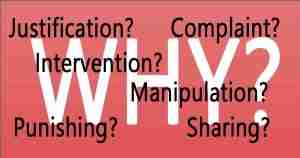
So, why share this “I’m not in love with you” statement? Generally, when a spouse says they are not in love, they want some kind of action to take place. They are not just telling you in order to give you an update on their feelings. Sometimes they will want both of you to work on your marriage and become closer. Sometimes they will want you to work on your marriage without their help. Sometimes they will want to separate or divorce. Sometimes they will be trying to punish you emotionally.
There are other possibilities, too.
Get clarification, if you can

I recommend you get clarification, if you can, for why your spouse is telling you this. You must resist the urge to make it multiple choice or to jump to action. There is a time for action, but it is not at the clarification stage. And, getting reactive will make things worse. What’s the difference between reactions and actions? Actions are thought out and deliberate. Reactions are more of a reflex and often make things worse. Improving relationships means ending reactivity and being more active in ways that help.
Reactivity rewards people who are attempting to control you or hurt you, which is why reactive people end up with spouses who often threaten divorce, scream and shout, give the silent treatment, or make other threats. Reactive people are easy to manipulate. Just pull the right string and they will dance the way you want them to.
How do you get clarification?
I recommend you to get clarification by first validating what your spouse has said and then asking a clarifying question. Validating first will help your spouse answer your question. You will notice if you follow much of my material, that validation comes up all the time. It is because validation is the key to all relationship building, and without it, no relationship building happens.

Society teaches that understanding is the key to relationships. This leads people down the wrong path of talking and hostile assertiveness. The actual key is validation. Don’t take my word for it, try them both and see for yourself which works better. Experience is the best teacher for those who can learn from it.
What is validation?
Validation is making someone feel good, right, or normal about the way they think, feel, or behave. Just listening and understanding does not achieve any of those three things. I hate the phrase, “I hear what you are saying.” Like popcorn without butter, it is dissatisfying. It doesn’t validate anything.
Just trying to understand your spouse, or worse yet, debating your spouse will not bring any improvement. If you are a debater, stop debating for instant relationship improvement. It has been cheating you out of more love and connection.

Instead of debating, validate with appreciation:
“Thank you for sharing that with me.” Appreciation is a type of validation because it makes people feel good for doing something.
Why should you thank your spouse for sharing his or her lack of feelings? First, because it helps you to connect with your spouse, and secondly, because it’s important information for you to have.
Then, follow up with clarification questions

As questions such as, “How long have you been feeling this way?” and “Why are you telling me this now?” If you want answers to both questions, then ask them one at a time.
Hopefully, you will get a useful answer, but even if you don’t, validate again. Validate, validate, validate. If you only learn one thing about relationships, make it validation. I have never seen a relationship work for someone who can’t or doesn’t validate.
How do you validate a non-answer? For example, if your spouse says “I don’t want to talk about it,” it would seem weird since he or she brought it up to begin with. But, weird or not, just validate his or her desire not to talk about it by saying something like, “Yeah, that’s a hard thing to talk about.” This is empathy, which is another way to validate.
Suppose your spouse says, “I want to work on our marriage.”
Then you can agree that working on your marriage is an important thing to do. Agreement is another way to validate because agreement makes people feel right and similar.
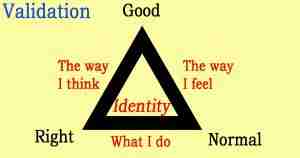
If your spouse said, “I want a divorce” or separation,
you could validate with empathy by saying something like, “I think most people who don’t feel in love don’t want to keep going in their marriage.” Empathy is validation because it makes people feel normal.
People often get this wrong by trying to convince, which makes them lose connection. If you want to increase your chances of reconciling, you need to foster similarity, not differences. The only way to connect with anyone is with our similarities.
There are many variations of this. If you can validate this way, without getting upset, you can promote the emotional connection between the two of you–starting at that moment. It just might be the spark that you can use to start to rebuild the fire of love in your marriage. Validating is also a secure way to respond that does not reward controlling behavior.

Take a time out after getting clarification
Whether or not you have gotten any clarification, don’t jump into problem solving with your spouse. If necessary, tell your spouse that it is an important topic that you need some time to process on your own. Unless there is imminent grave danger, I recommend you always take time to reflect on difficult situations. It isn’t avoidance unless you don’t actually get back to your spouse fairly soon.
Both conflict and avoidance increase damage, whereas calming down, thinking, and making a plan is a productive response. People with self control issues need to practice correct responding so that when they encounter a threatening situation, they take correct actions instead of escalating problems.
The problem with reactive people isn’t that they respond quickly–it’s that they respond quickly in the wrong way.
Process the information
Processing information means mainly asking yourself some clarifying questions and answering them. As a reconciliation coach, I ask people questions all the time to help them understand better what to do. Unlike a life coach, I don’t only ask questions. I also provide direct training in relationship skills–something life coaches and counselors generally do not do, or in a very limited way.
When your spouse has said, “I love you, but I’m not in love with you,” or something of the sort, here are some helpful questions to ask yourself during your time of reflection and processing.

Self-reflection questions
- Is this the first time my spouse is saying this? If not, then when did it happen before?
- Do we spend too much time together?
- Have I made my spouse a priority over my job, kids, and others?
- Do my spouse’s feelings make sense given how little we date, spend one-on-one time, and have sex?
- Is this consistent with how my spouse has been behaving toward me over the past few months?
- Are there things going on in my spouse’s life, other than our relationship, that may be making him or her very stressed?
- Is my spouse encountering any physical illnesses or challenges at this time?
- Is my spouse grieving any recent losses?
- Is my spouse having problems with other relationships, or just ours?
- Are there any indications that my spouse is having an affair?
The answer to these questions will help you to know whether you need to be more empathetic, more helpful, or more attractive. From this list, two of the most common reasons for not being in love are too little time together and too much time together. If you think that may be to blame, then gradually increase positive time together or gradually reduce your time together.
Too much or too little of a good thing is a bad thing.
Sudden changes are not helpful, no matter how much you feel like jumping into action and changing everything.
Sudden changes create doubt. Only gradual changes build trust.
Go back to your spouse with your response
Choose a time when things are fairly peaceful. Ask your spouse if he or she has time to talk. If he or she doesn’t, then ask when a good time would be and schedule it. If your spouse doesn’t want to talk, then get back to him or her in an email or blank greeting card. I like blank greeting cards because they are personal without feeling too much like pursuit.
Whether face-to-face or in writing, what you say should be fairly simple.

Something like,
“Thank you again for letting me know you don’t feel in love with me anymore. I’ve thought about that quite a bit ,,,” After this, what you say would depend on what you had figured out. I often help clients craft such messages.
An example might be:
“Thank you again for letting me know you don’t feel in love with me anymore. I’m sure it wasn’t easy to say. I’ve thought a lot about it and I realized that most women wouldn’t feel in love with a man who hardly ever said nice things or spent time with her.”
There would still be one more thing to add to this message, depending on what she wanted. It might be:
“I think we’ve prioritized everything except our relationship,” or
“If working on our relationship can help us to get those feelings back, I’m all in,” or
“I can’t blame you for wanting to separate/divorce. I appreciate you staying with me as long as you did,” or
“I know this time has been hard for you in many ways,” or
“I’m not accusing you, but if you have found someone else, it makes sense that you wouldn’t have strong feelings for me anymore.”
There are many possibilities. This initial response is very important. It should provide empathy, not solutions. If you can do that well, you can create a connection on which to build to save your marriage.
All reconciling begins with empathy. It never begins with persuasion or problem-solving. No matter how unfair you feel the situation is, if you want to reconcile, you must begin with empathy.
Always connect before attempting to fix.
Things to avoid in your response.

Some of the major problems people have when trying to reconcile on their own is starting on the wrong step, combining steps, and moving too fast. Success comes from doing the right steps, in the right order, at the right pace.
Many people behave like the man who was in so much of a hurry that he tried to put on both socks at the same time and couldn’t get anywhere.
Here are four things not to include in an empathetic response:
- Apologies. People who apologize once they have been caught tend not to be sorry or taken very seriously. The apology at this time is taken as a pursuit behavior designed to get the other person to change their mind. Often, the apology at this time actually provokes anger. “If you are sorry now, then why did you keep doing it?” I’m not against apologies, but they don’t come at this initial step. Repeated apologies cause repeated irritation; make sure you don’t do that either.
- Explanations. Explanations tend to come off more as excuses and are invalidating. “I had a reason to be cold, distant, argumentative, nonsexual, work all the time, and so forth, so you shouldn’t feel this way.” If you ever make out your spouse’s feelings to be wrong, you will create distance and be far worse off than if you simply validate the feelings. “I can’t blame you, I’d feel that way too…”
- Promises to change: Promising to change is another pursuit behavior. It rewards your spouse for being threatening if that is what he or she is doing. If your spouse isn’t being manipulative, then it is anger-provoking. “If you can do it now, then why couldn’t you do it before?” The only conclusion is that you are willing to change now for yourself, although you weren’t willing to change before for your spouse.
- Asking for more time. This isn’t good for the same reasons that promising to change isn’t good. You don’t need to get your spouse to agree to give you time to change. Simply start working on changing in a gradual and positive way.
Stay connected while gradually changing

As you change, so will your spouse. This is how I help people to reconcile with a rejecting spouse.
Stage 1–The rejection stage
When I help clients to reconcile, there are three stages their spouses go through in the reconciling process. The first is being rejecting and having no desire to reconcile. This stage requires being relaxed, friendly but not pursuing, cooperative, and becoming more desirable. This stage is most difficult for clients as they are making positive changes in the face of rejection. Every interaction is important, and this is when a coach is most needed. It is easy to get stuck trying to create a spark so that the fire never starts burning.
Stage 2–The ambivalence stage
The second stage that an initially not in love spouse goes through is ambivalence. It is a time of being hot and cold, pushing away and getting close, saying nice things one day and nasty things the next. Many clients tend to think something went wrong when actually, they have made good progress. Their spouse is torn in two directions, whereas before they just wanted to end their marriage. As long as my clients can continue the good work they are doing without becoming triggered and emotionally reactive, they will get through this necessary stage.
Spouses don’t just flip from rejecting to reconciling. Between those two opposites is the middle ground of confusion and stress.
State 3–Mutual relationship building
The third stage is helped along with good boundaries. It is the stage of mutual relationship building. At this stage, both husband and wife are invested again in their relationship. Reconciliation doesn’t happen until commitment does, but that comes at the end of this stage.
It’s sad to me that so many people think they can’t build their relationship until or unless their spouse is actively building it too, but as you can see, this doesn’t happen until stage three. If you are not starting there, then you can work your way there.

The end result can be really good
Managed correctly, a spouse saying “I’m not in love with you,” can create a series of interactions that create a strong and loving marriage. Many people who initially felt gut-punched by their spouse ended up being glad that they had to go through that. Some people won’t take any good actions until they are gut-punched.
It is far better to have your spouse say, “I’m not in love with you than it is to just get served divorce papers because they never spoke up.
The danger that follows reconciling
Unfortunately, many people become complacent once their marriage is rebuilt. They slip back to old ways of relating, stop prioritizing their marriage, and slide all the way back to the bottom of the hole they were in before. Let me level with you–you only get so many chances. Many people only get one. If you do get another chance, it will take a lot longer to build trust, and old wounds will be harder to heal.
“Can we reconcile?” is not the most important question
If your spouse is not in love with you, the single most important thing for you to consider is not whether you can reconcile with your spouse. That is possible as long as you have contact. The single most important question is,
Can you be the kind of person your spouse finds desirable, and can you continue to be that way for the rest of your marriage?
Another way to say that is,
“What kind of person do you have to be for your spouse to find you desirable? Is that the way that you also want to be?”

If it is, and you would like my help to be that person and go through the steps of reconciling, I would be happy to help. See my Re-Connections Coaching Package in the description for more information about how you and I can work one-on-one to restore your marriage.
For further study:
Rokach, A. (2024). The Meanings of Love: An Introduction. The Journal of Psychology, 158(1), 1–4. https://doi.org/10.1080/00223980.2024.2307284


