
A Better, More Enjoyable Way to Build Your Marriage
Relationship building requires some skills, but should not feel unenjoyable. Here are five steps that will help you and your spouse enjoy the marriage-building process.
You can use the same marriage-building steps that I teach my clients to use to reconcile their marriages. The great benefit of these steps is that they will build your relationship whether they are used by both you and your spouse, or you alone.
The five steps to enjoyable marriage building are:
- Start where your spouse is emotionally.
- Eliminate relationship-damaging behaviors,
- Use validation to rebuild connection.
- Become more attractive and desirable to your spouse.
- Use healthy boundaries in your marriage.
Each step actually involves several skills, but even doing a few in each area can help a lot. Follow these steps in this order, and work on one at a time.

It may be tempting to start with boundaries if your spouse is doing damaging things. And, you may be in so much of a hurry to improve your marriage that you try to do multiple things at once. Humans just are not good at doing things two at a time. Consider putting on your socks. Putting on one at a time is easy. Did you ever try putting them both on at once? Give it a try.

One step at a time is the easiest way, the fastest way, and the most enjoyable way to restore your marriage. I encourage you to do things the easy way. Whenever improving your marriage feels really hard, you are using the wrong method, skipping ahead, trying to do too much at once, or have a spouse who will reject you no matter what.
Rebuilding trust in marriage takes time
Before you decide your spouse is the reason for lack of progress, make sure you check that you are doing the other things consistently and long enough to build trust. It takes a minimum of three consistent months to rebuild trust. If you are in a hurry and focused on reconciling, rebuilding will feel very difficult. If you are instead focused on enjoyable interactions, the reconciling goal will take care of itself.
Let’s go over the steps in more detail.
Step one: Start where your spouse is emotionally
If your spouse is in love with you, then setting up a date may be a very easy step and something you can do right away. On the other hand, if your spouse is full of resentment, trying to set up a date will be like trying to sell the idea of getting a root canal just for fun. With a cold, distant, or resentful spouse you can get to dating, but you can’t start with dating.

The right time to initiate anything is when your spouse already wants to do it.
Most of the time, people start where they want to be rather than where their spouse is. For example, a man may want to reconcile with a wife who doesn’t even want to talk to him anymore. Because he wants to reconcile, he starts asking her to work on the marriage. The result–he gets squarely rejected. Typically, rather than notice that this approach did not work, he will continue to talk to her about reconciling and try to convince her to go out with him or go to marriage counseling. He is doing things the hard way. He is trying to put on both socks at once.
Instead, this man’s first step should be to be relaxed and empathetic with no attempts to convince or pursue. That will be easy, and he will get no resistance. And yet, he has started to rebuild.
Small steps create faster progress
As his wife starts to be more relaxed around him, he can then do a little, occasional small talk. He has to help her to feel comfortable interacting with him. If he falls back to convincing her to work on the marriage, he will have to start over. Just like in a new relationship, building trust and an ease with each other precedes any further relationship development.
For some new relationships, that may come quickly. For new relationships in which the other person has a lot of upset about a previous relationship, trust and ease take longer. That is always the case when rebuilding a marriage since your spouse has upset about your history together.
Enjoy each step of progress
This new comfort with each other should feel good, just like in a new relationship. If you are hating this process, then you may be too impatient to get commitment. Your focus should be on helping your spouse to enjoy your interactions. That goal will help you get to commitment.
As a gardener, I focus on the steps: prepping the soil, sowing the seed, providing the right amount of water. The vegetables then come by themselves. Focus on the steps, and you will get the fruits of a good marriage.
Step two: Stop relationship-damaging behaviors
Weed management is important in gardening. It is in marriage-building too.
Any damaging habits we have are like weeds that can rob our marriage of vitality, even if we are doing some really good things too.
Stopping our own bad habits is perhaps the hardest step because we don’t intentionally try to do harmful behaviors. We do what we think is the best thing to do at the moment. Unfortunately, what we think is best may not actually be best or any good at all.
Watering our house plants every day may seem great until they die. Then we may learn that each plant has its own requirements for water, nutrients, and so forth. Our intentions had been good, but our ignorance killed our plants. Many people damage their relationships by spending too much time with their spouse or by frequently talking about problems.
It’s what we don’t know that does the damage
Both coaches and counselors can help people see what is not working–what is harmful rather than helpful. Because we can’t see our own blind spots, we have to learn from some external source. If we are doing all that we know, then it is what we don’t know which is causing the problem. Don’t do more of the same–find out what you are missing.
I wrote my book, Overcome Neediness and Get the Love You Want to help people to uncover their behavioral blind spots. Many people have told me they wish they had that book years before. I wish that I did as well. I had to learn everything in that book the hard way–through failed relationships. You don’t have to learn the same way.
An example of a common relational blind spot:
Most people don’t realize that repeatedly discussing problems is harmful. They usually think just the opposite. Maybe you also believe that repeatedly discussing problems is the thing to do to improve relationships. But when you stop to think about those repeated discussions you are having with your spouse, are they really making your marriage better? Or are they making your relationship more distant?

If talking about problems is not fixing problems, then talking about problems is not the solution no matter how much you think it should be.
Another example:
Do you frequently share your negative thoughts and feelings with your spouse? This is something that counselors often teach people to do, while I don’t. The reason? Sharing negative thoughts and feelings only creates change with a high-empathy spouse. With all other spouses, it causes defensiveness either in the form of shutting down or blaming.
Is your negative sharing really helping? Or is it making things worse? No matter how much you believe sharing your feelings is helpful, if it is not working, it is not helpful.
I don’t want you to get the idea that I just have clients put on a happy face and stuff their feelings. Not at all. Instead, I help them do what leads to improved feelings and a better relationship, such as making positive requests and using healthy boundaries.
Substituting relationship-building behaviors for relationship-damaging behaviors is an essential step for making progress.
Substituting what works well for what only works a little, or only works temporarily, will make growing your relationship more enjoyable.
Step three: Use validation to rebuild connection
People who want to reconcile are often so opposed to their spouse’s desires and feelings that they hardly validate at all. They are focused on preventing divorce, and because of that goal, behave in ways that make their spouse feel different and pressured, while they make themselves even less desirable.
A better goal than preventing divorce would be “behave in a way that makes my spouse want to stay with me.” This leads away from damaging behaviors that pursue and pressure and toward helpful behaviors like being relaxed and validating.
Validation defined
Validation means making someone feel good, similar, right, or normal about what they think, feel, do or experience. People want to be with people who make them feel this way. We help people feel this way by agreeing with their ideas, empathizing with their feelings, complimenting what they like about themselves, appreciating what they do for us, and admiring qualities in them that we wish we had.
The better you make your spouse feel about himself or herself, the better he or she will feel about you. And, the more your spouse will want to hang out with you.
If your spouse can say that you are the person who makes him or her feel best about himself or herself, then you are doing a great job. Otherwise, you need to work on this step.
You don’t have to like everything about your spouse to do this. But not liking some things about your spouse is not an excuse for not validating. If you don’t like anything about your spouse, the most loving thing would be to allow your spouse to find someone who does.
Finding the good in people and even praying for our enemies, as the Bible tells us to do (Matthew 5:44), is emotional weight lifting that allows us to love our spouse better and to feel more love in our hearts. People who look for the bad and foster hate become miserable, lonely people, unable to love anyone.
The more often and sincerely you validate your spouse, the more you will like your spouse and the more your spouse will like you.
Understanding is not validation
Understanding why your spouse wants distance is not the same as making him or her feel normal about it. On the other hand, saying something like, “I think a lot of people in your situation would feel the same way,” is validating. Adding appreciation like, “Thank you for giving me all the good years that we did have with each other,” is further validation. Unlike mere understanding, validation brings people closer.
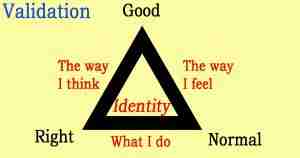
Like the other steps, this process of validating should be enjoyable for both you and your spouse. I like making my wife feel good, right, similar, and normal with my validation. I get no joy out of proving her wrong.
When spouses have affairs, it usually happens with others who are better at validating them than their spouse.
Step four: Become more attractive and desirable to your spouse
How similar are you to the person your spouse fell in love with before you were married? If your spouse were meeting you for the first time today, would your appearance and lifestyle attract him or her to you? Are you energetic, social, independent, and successful?
Do not expect unconditional love and positive regard from your spouse. You won’t get it. You need to be worthy of it or your spouse will not love you. This information is ice water on the head for many people, but there are a lot of people who need to wake up to reality. What you do with and without your spouse makes you more or less desirable to your spouse.
Becoming more desirable
Becoming more desirable should be enjoyable. Making friends, doing better with your career, learning new independence skills, and being more energetic are things that make people happier whether they are married or not. Becoming more desirable is the process of enjoying your life more while inviting your spouse to join in.
We get married not to become happy, but to share the happiness we already have. If you cannot be happy without your spouse, you will not be attractive to your spouse.

Is there anything that makes you less attractive/desirable that you are able to change? Then change it. Don’t wait to see if your marriage will work out before becoming desirable. That is backwards. I’m not going to wait to see if my tomatoes are good before deciding whether to fertilize them.
Marriage is work–enjoyable work. It’s like a career that you never want to retire from.
Step five: Use healthy boundaries in your marriage
Using boundaries is not something people normally think of as enjoyable. However, there is more joy in boundaries than any alternative. Boundaries prevent continued resentment, end conflict, and stop behaviors which damage the relationship. But, like exercise, the benefits come after the boundaries and not during them.
For example:
Let’s consider a typical example. Suppose your spouse says negative things about you in public. You could criticize your spouse by saying how much you don’t like that behavior. But, because criticism is only weakly effective at best, the behavior will happen again, causing a continuing need for criticism as well as frustration and anger with your spouse’s bad behavior. Instead of criticism, you could just say nothing. While this would prevent conflict, it would make you more and more resentful. Both criticism and ignoring bad behavior lead to less enjoyable relationships.
Another possibility is that you could simply let your spouse know that whenever he or she says something bad about you in public, you will immediately leave and go wherever you please. If you do this, of course your spouse won’t like it, and you will have to leave a few times when this happens (boundaries always get tested, so never make a boundary you can’t keep).
The result will be that your spouse will stop saying bad things about you in public. There will be no ongoing conflict over this, and you will not build resentment. In fact, you will feel empowered, and going out with your spouse will be more enjoyable for both of you. We can’t be respected without good boundary skills.
The more effective your skills, the more enjoyable marriage-building will be
Start today
Start looking at what is working and what isn’t. Be ready to change your beliefs if they don’t match reality. That’s the only way to become successful whether you are running a business or working on a relationship.
A business that believes advertising is the key to riches, yet is going into debt with advertising, will soon be out of business. It may make sense to advertise, but if it isn’t working, it isn’t working. Perhaps money would be better spent on improving your product.
The same could be said for many single and married people. Working on yourself may be much more effective than working on your spouse. If you don’t see anything to fix in yourself, purchase my book Overcome Neediness and Get the Love You Want for help identifying your behavioral blind spots.

Get help if you get stuck
If your relationship is already at the point where no change you make seems to help, I recommend you get professional help. My Re-Connections Coaching Package can help you with the right behavior substitutions to get positive results. Remember–relationship improvement and reconciling take time but should be enjoyable. If they’re not enjoyable, then you are doing something wrong and need to change that. Did you enjoy building your relationship with your spouse before you got married? That feeling is what I am talking about.

FAQ
Why is it so hard to reconcile?
Difficulty can happen because trust has dropped to near zero. It can also happen because of doing the wrong steps or trying to move more quickly than your spouse’s feelings can grow. Pursuit or pressure can stop all progress.
How can I make my spouse desire me more?
By validating your spouse and being more of the kind of person that your spouse would be interested in if you were single. Use the same skills as if you were single, but go at your spouse’s pace. Pursuit is chasing after. Attraction is being the one your spouse wants to pursue.
How can I identify my relationship blind spots?
By looking at what isn’t working. You believe it should be, so there is something you are missing or getting wrong.
For further study:
Canevello, A., & Crocker, J. (2010). Creating good relationships: responsiveness, relationship quality, and interpersonal goals. Journal of personality and social psychology, 99(1), 78–106. https://doi.org/10.1037/a0018186