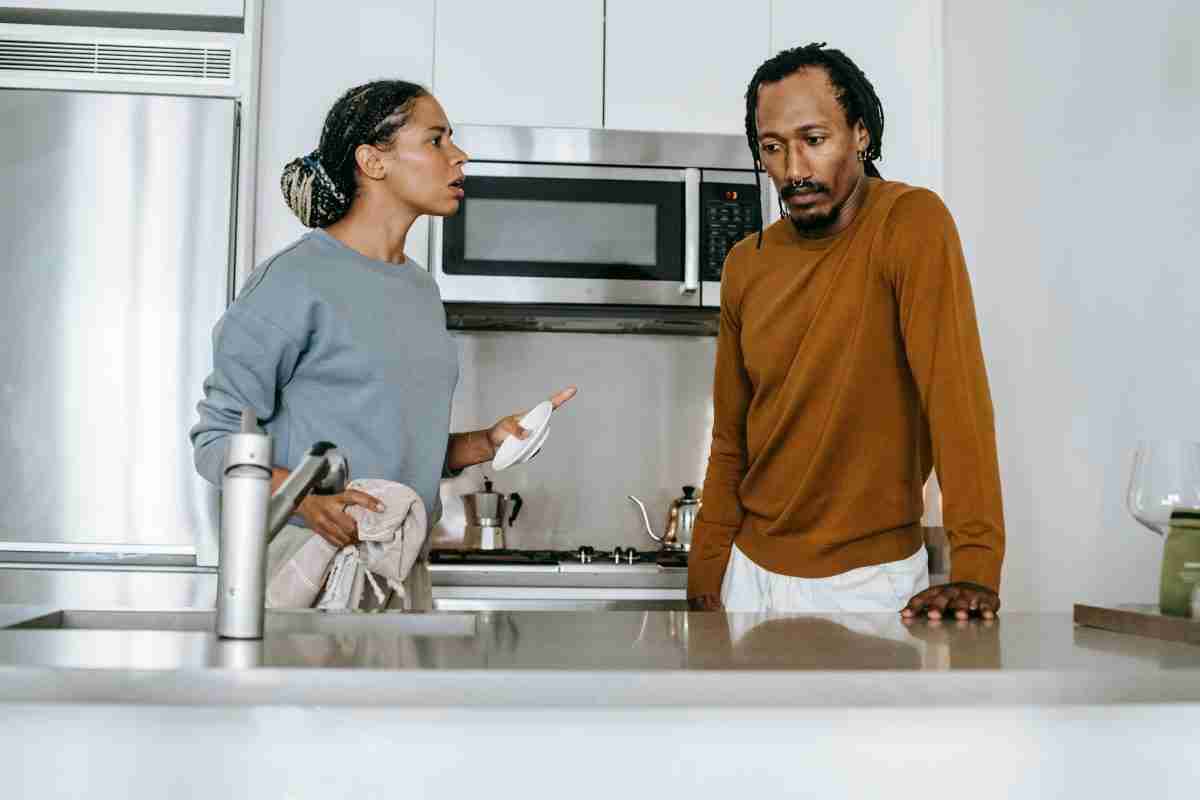
How to Stop Criticizing Your Spouse (and What to Do Instead)
Many people accidentally criticize their spouse without even realizing it. There is a good chance you are, too. Learn the five things you say that will be taken as criticism by your spouse, even if you don’t mean it that way.

What Is Criticism in a Marriage?

Simply put, criticism is letting someone know that we don’t like something about them. We may have excellent reasons not to like things about people, but no one appreciates criticism. Although many people believe that sharing our dislikes with our spouse is a route to positive change, the reality is quite the opposite. The more we criticize, the more damage we do. Just like arguing and other needy behaviors, there is no way to criticize your way to a better relationship.
We of course can express our needs and concerns to our spouse. When we do that, we need to do it in a way that is not critical. If we don’t, our spouse will criticize back, get defensive, or shut down. None of those three actions will lead to a better outcome and you will end up wishing you hadn’t said anything at all.
It is not enough to be honest in relationships–we must be loving as well. In Ephesians 4, The Bible teaches us to speak the truth in love, which is different from merely speaking the truth. Speaking the truth in love is a skill. Unless you have learned it, you don’t have that skill, because all skills are learned.
Today, I will teach you to recognize subtle forms of criticism so you can eliminate them and the damage that criticism does. I will also start you on the path to dealing with things you don’t like without doing more damage to your relationship.
Let’s start off talking about…
Five Common Forms of Criticism in Marriage

Many people who don’t think they criticize actually do because of false beliefs and misunderstanding. We all have false beliefs and must actively test what we believe against evidence, or we will keep on doing what we think is right, even if it is damaging our marriage.
Frequent criticism, especially in the absence of good emotional connection, leads to loss of love. If we are frequently criticized, we will feel like we are not good enough. To emotionally protect us, our minds will shut down feelings of love for the criticizer. That’s because it is less damaging to be criticized by someone we don’t love. When that happens, we can’t feel in love with the criticizer again until trust has been restored–our mind simply won’t let us.
1. Openly Disliking Something About Your Spouse

One way we criticize is to directly say, “I don’t like (this thing about you).” For example, saying “I don’t like the way you style your hair,” would be criticism. Most people recognize that as criticism and are not likely to do it unless they are intentionally trying to hurt someone.
But, saying “I don’t like it when you don’t text if you are going to be late,” is also criticism. Many people don’t recognize this as criticism because they feel it is a reasonable thing not to like.
Let this expose a false belief you may have. No matter how reasonable it may be not to like something, when we express it openly and honestly, we will not create a better marriage. Instead, we will create a defensive reaction will create more distance in our relationships. It is “loving and honest” rather than “open and honest,” which will actually build our relationships, just as the Bible says.
How reactive your spouse will be will depends on how critical you are overall, and your spouse’s level of security in the face of criticism. Some people have a history of being criticized and are very sensitive to it. You may not be a very critical person, but your spouse could react strongly to the slightest criticism due to being criticized a lot as a child.
A strong relationship will not be taken down by a few criticisms, but a weak one can break with just a small one (“the straw that broke the camel’s back.” Keeping your marriage strong will help your marriage recover quickly from any hastily spoken harsh words.
Be very careful not to express directly what you don’t like about your spouse–the most obvious form of criticism.
Another way to criticize is …
2. Expressing Hopes or Wishes for Your Spouse to Change

This second way to criticize is when we express our “wish” or “hope” that our spouse will change. While what we wish for may be a good thing, it is directly implying that the way our spouse is now is bad.
“I hope you style your hair differently next time,” is just as much a criticism as saying, “I don’t like your hairstyle.”
“I hope next time you let me know when you are going to be late,” is just as much a criticism as saying, “I don’t like it that you didn’t let me know you were going to be late.”
It’s okay to wish or hope for things that reflect a compliment, so let’s not throw the baby out with the bathwater:
“I hope you can visit again soon,” implies that we enjoyed the person’s visit.
“I wish we could make love like this every day,” could either be a criticism or a compliment, depending on whether the other person thinks you are paying a compliment to their love making or criticizing them for not making love often enough.
If what you say has a good chance to be taken the wrong way, then find a different way to say it. For this example, you could just say, “I really enjoy making love with you.”
Another way to criticize is…
3. Asking “Why” Questions

Asking “why” questions is something that intellectually curious people may do, unwittingly criticizing people in the process. While you may be merely curious when you ask your husband or wife, “Why do you do it that way?” The he or she may think you are saying that they are not doing something in a good way or correct way.
“Why don’t you let me know when you are going to be late?” is not likely to be taken as mere curiosity by most spouses. Being “late” is a negative, and so your “why” question about it will be taken as criticism.
“Why do you style your hair that way?” will be taken as criticism because it is obviously not a compliment, and so is assumed to be negative. The assumption will be that you don’t like the hair style.
Just as with hoping and wishing, there is a good way to use “why questions.” We can ask “why questions associated with compliments.
For example, “Why are your roses so much more beautiful than other people’s?” or “Why does your every move turn me on?” Some people will like this kind of “why compliment,” especially those with a love language of words of appreciation. (You can take a quiz in the learning center on my website to determine your love language and that of your spouse). See the link in the description.
If you are intellectually curious and want to ask a “why question,” then preface with a statement about how you like the thing you are asking about. “I really like the way you make homemade bread. Why did you decide to do that instead of just buying it?” Make sure you are not a person who needs to know why about everything. That characteristic is no more endearing in an adult than it is in a three year old child.
Regardless of what you say verbally, make sure you don’t use…
4. Negative Body Language

This is another way to criticize your spouse or anyone else. You criticize whenever you use negative body language in response to your spouse’s appearance or actions. Your judgmental message comes through loud and clear without you having had to say a word. A scowl, looking away, a defensive posture, bad tone of voice, or just avoiding can very clearly say things like, “I don’t like what you just said,” “I don’t like the way you look,” “I don’ like the way you do that,” and so on.
While it is a very good skill to be able read other people’s reactions, it is an equally important skill to be able to have good reactions to other people. Body language which says, “I like you,” “I agree with you,” “I know how you feel,” “I care about you,” and “I love you,” should appear every time our spouse sees us.
We need to cut out disapproving or uncaring body language as much as possible. If you try to train your spouse to do better by using negative body language, you will actually find that your spouse’s behavior and your relationship become worse.
While disapproval can temporarily suppress behavior, it does not create lasting improvement. Approval, on the other hand, does.
5. Giving Unsolicited Advice or Solutions

The fifth way to criticize is to give unwanted advice, suggestions, or solutions. Although you may easily be able to see where your spouse is going wrong, helping this way too often is not helpful for your relationship. People desire approval more than they do correction, even when they ask you for advice. Spouses do much better connecting when they show approval, even if they could have done it better.
Giving unsolicited advice really is pointing out to our spouse their deficiency. If you advise your spouse on how to load the dishwasher, your spouse will feel criticized about the way he or she loads the dishes. If you advise your spouse on how to be more romantic, your spouse will feel like he or she is not romantic enough.
Although your way may be the best way, there are more loving ways to help your spouse be more romantic and more important things to worry about than whether every dish comes out clean.
My advice about giving advice is don’t–unless you are asked for it, and even then only if it is really necessary. Although I am a relationship coach, I would never advise my friends about how to improve their marriages. Although they might thank me to my face, they would feel criticized and may end their friendship with me.
Even if they ask me for my advice, I am much more likely to empathize with them about how difficult it is to keep a marriage strong than I am to give them marriage advice.
It is quite a different story with my clients, of course. My clients want my advice and are paying me for it. When I give it, they don’t feel like I don’t like them. They sincerely want to know how to improve and save their marriage.
Now that you know what not to do, let’s talk about…
What to Do Instead of Criticizing

The major problem with criticism is it makes our spouse feel that not only do we not like what they do, it makes them feel like we don’t like them. The more criticized they feel, the more their feelings of love for us will shut down. It’s a very common way that people fall out of love. The other common way is failing to maintain emotional connection. If you combine criticism with failing to maintain emotional connection, your marriage can deteriorate rapidly.
There are several remedies for curing a marriage which is unhealthy in this way.
- The first is stop all forms of criticism. Instead look for every chance to make your spouse feel liked and loved. Of course this must be done gradually so as to appear sincere and not create rejection.
- Another remedy is to maintain emotional connection by spending one-on-one time together each day, going out on a date at least once a week, and having a regular, enjoyable sex life. These will help to mitigate your occasional critical slip-ups.
- Another remedy is accept your spouse as a fallible human being who may be far less capable than you. Lower your expectations so that you have less to criticize and focus on making your spouse feel good about the things that he or she does well (just as you would with children).
The more you make your spouse feel good about himself or herself, the better you will be treated by your spouse.
Make changes after you have made your marriage strong
You can help your spouse to make positive changes as long as you have done your part to love and connect with your spouse. That always comes first. Trying to change a spouse in a bad relationship will get you rejection. Many people fail to improve their relationships because they work on changing their spouse before they work on loving their spouse. That is the wrong order for success.
I will assume you have already done a good job with connection and making your spouse feel loved. Even so, you may need to help your spouse to change (always to create a win-win).
Positive Requests

For those things that you just can’t keep putting up with, start with a positive request whenever possible. (I have a podcast on this topic you can use to learn how. See the link in the description).
Here is an example: “Honey, I really look forward to our dates. Would it be okay with you if we leave our cell phones off when we’re out so I can have more of you to myself?” Learning to phrase things this way is a skill well worth working on.
Boundaries
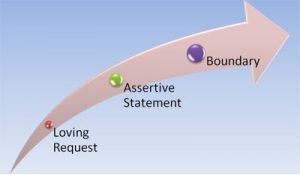
If a positive request doesn’t result in what you want, you can move on to using a boundary. Decide first if it is worth the trouble and damage that a boundary will do. Boundaries, used correctly, are powerful and effective, but they do cause some short term damage. Short term damage is always better than long term damage, so you have to use boundaries for any marriage killing issues.
Some people hesitate to use boundaries and instead let their marriages fall apart. Clearly doing that would be worse. Suffice it to say, don’t try to use a boundary to get a change that you don’t like, but which is not a major issue.
I have several articles on boundaries on my website. Type the word “boundaries” into the search box to see them. It is wise to get help with your boundaries if it is your first time using them or if you have not had success with them.
Focus on Your Goals

If you follow my advice about doing the right steps in the right order, you will end up with a spouse who looks forward to being with you, and who gives you the best he or she can. Just think how much you would do for a spouse who made you feel loved, made you feel good about yourself, made your time together enjoyable, asked you lovingly for reasonable changes, and who cared enough not to put up with very damaging behaviors.
I think you would love, respect, and be loyal to such a spouse. That is what you can create in your spouse–all with changes you make, without ever having to have a discussion about it. Don’t try to do with discussion what only your actions can accomplish.
Getting Started on the Path to a Happy and Healthy Marriage

Many, many people have told me how my book, Overcome Neediness and Get the Love You Want, helped them to turn their marriage around by ending needy behaviors such as criticizing, complaining, and arguing. Often they work to end their needy behaviors as a first step, and then worked with me as a second step.
Almost everyone has some needy behaviors. It’s not unusual to work with someone who has been criticizing and arguing with his or her spouse for years. Their spouses are doing it right along with them of course–each of them hoping to get the other person to change while become more distant in their marriage. An inch more distance every day doesn’t seem like much until you are a mile apart.
I think there is a fear in such relationships that if the criticism or arguing stopped, that things would never change. The ironic thing is that continuing to criticize and argue is what prevents things from changing. Criticizing and arguing can lead to resentful compliance. This seems like positive change. But, when people make themselves do something just to prevent hearing more criticism, it decreases their feels of love. Love and resentment are not good bedfellows.
Change only comes when husband or wife (it only takes one), stops being defensive, stops attacking, learns to agree with the truth in what is being said, learns to empathize with the difficulty their spouse is having, and starts treating their spouse like someone they love. And when they show how they look forward to being with husband or wife every morning, afternoon, and night, it is transformative. A year talking as a couple in couple’s therapy cannot accomplish what a week of behaving like this can.
Do It the Easier Way (Not Easy–Nothing Good is Easy)

If you would like my help in ending the neediness, restoring the love, and getting to the place where you and your spouse look forward to each encounter, I would be honored to help. See my coaching package listings for more details.
Why continue to have distance with your spouse when you could have closeness instead?
Learn more about the impact of criticism on relationships: